



Let us help you find what you're looking for.


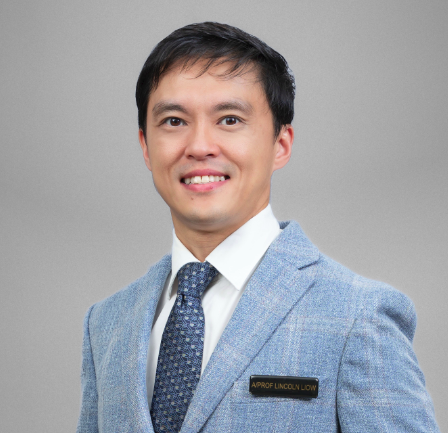
Assoc Prof Lincoln Liow
MBBS (S’pore), DWD (CAW), MRCSEd, MMed (Ortho), MCI, MFSTEd, FRCSEd (Orth), FAMS
Consultant
 Singapore General Hospital
Specialty: Orthopaedic Surgery
Conditions Treated By This Doctor
Enhanced Recovery After Surgery (ERAS) Hip and Knee Replacement
Hip and Knee Osteoarthritis
Joint Replacement
Knee Arthritis and Hip Arthritis
Knee Arthroplasty
Minimally Invasive Surgery (MIS) Joint Replacement
Outpatient Total and Unicompartmental Knee Replacement (Day Surgery)
Robotic-assisted Hip Arthroplasty
Robotic-assisted Knee Arthroplasty
Total Hip Replacement
Total Hip Replacement (Direct Anterior Approach)
Total Knee Replacement
Clinical Interests
Adult Reconstruction Service


About Doctor
Dr. Lincoln Liow is a Consultant Orthopaedic Surgeon at Singapore General Hospital and Clinical Associate Professor at Duke-NUS Medical School. The recipient of the prestigious Singapore Armed Forces Medicine Scholarship, he holds dual certification from the United States Educational Commission for Foreign Medical Graduates (ECFMG) and the Federation of State Medical Boards (FSMB).
Dr. Liow's international training is a cornerstone of his expertise. He was competitively selected for an Orthopaedic Biomechanics Research Fellowship at Massachusetts General Hospital (MGH), Harvard Medical School, Boston, USA, before completing a clinical fellowship in Complex Joint Reconstruction at the Hospital for Special Surgery (HSS), New York — consistently ranked the world's No. 1 institution for orthopaedic surgery.
A high-volume robotic arthroplasty surgeon, Dr. Liow performs more than 500 joint replacements annually, with specialized expertise in Enhanced Recovery After Surgery (ERAS) protocols and complex revision arthroplasty. Recognized internationally as a Key Opinion Leader (KOL) and Global Faculty, he regularly teaches robotic and revision arthroplasty techniques at local, regional, and international courses, and performs live surgical demonstrations for educational events and knowledge exchanges worldwide.
Dr. Liow is a distinguished clinician-academician with an H-index of 32, over 150 peer-reviewed publications, more than 3,000 citations, and over S$3 million in competitive grant funding as Principal or Co-Investigator. He serves as Research Director of SGH Orthopaedic Surgery and Deputy Vice-Chair (Medical Device Development) of the SingHealth Musculoskeletal Academic Clinical Programme (MSK ACP).
An accomplished clinician-innovator, Dr. Liow was honoured with the JCI Ten Outstanding Young Persons Merit Award for Medical Innovation and the National Medical Research Council (NMRC) Clinician Innovator Award. He is Co-Founder and Chief Medical Advisor of CartiFuse, an orthopaedic start-up translating his research into clinical solutions. His work has earned recognition at the highest international levels, including the American Academy of Orthopaedic Surgeons (AAOS) Best Poster Award, the Hospital for Special Surgery Annual Alumni Meeting Best Research Poster Award, the Jacques Duparc Best Poster Award from the European Federation of National Associations of Orthopaedics and Traumatology (EFORT), Top 100 Posters at the American Association of Hip and Knee Surgeons (AAHKS) Annual Meeting, and a nomination for the New Investigator Recognition Award (NIRA) at the Orthopaedic Research Society Annual Meeting.
Dr. Liow serves on the editorial boards of the Journal of Arthroplasty (the official journal of AAHKS) and Arthroplasty, and is an invited peer reviewer for numerous leading orthopaedic journals. He remains deeply committed to the education and mentorship of the next generation of orthopaedic surgeons.
Languages Spoken
- English
Education and Training
- UCSF Global Life Sciences/Healthcare Entrepreneurship Course
- MIT Sloan Artificial Intelligence in Health Care, MIT Sloan School of Management
- Master of Clinical Investigation
- Fellow of the Royal College of Surgeons (Edinburgh) (Orthopaedic Surgery)
- United States Federation of State Medical Boards USMLE Step 3
- United States Medical Licensing Examination (USMLE) Educational Commission for Foreign Medical Graduates (ECFMG Certification)
- Principles and Practice of Clinical Research, Harvard Medical School
- Master of Medicine (Orthopaedic Surgery)
- Member of the Royal College of Surgeons (Edinburgh)
- Designated Workplace Doctor (Compressed Air Works)
- Bachelor of Medicine, Bachelor of Surgery
Professional Appointments and Committee Memberships
Current
- Health Science Research Unit, Singapore General Hospital – EXCO Member
- Ageing Peak Workgroup, Singapore General Hospital – Member
- American Association of Hip and Knee Surgeons, International Member
- Academy of Medicine, Singapore, Fellow
- The Royal College of Surgeons of Edinburgh, Fellow
- Faculty of Surgical Trainers – The Royal College of Surgeons of Edinburgh, Member
- Singapore Orthopaedic Association (SOA), Member
- Orthopaedic Research Society, Member
- AOTrauma, Member
Past appointments
- Singapore Orthopaedic Trainee Committee (Sub-Committee Of SOA), Chairman, 2013-2015
- Singapore Orthopaedic Trainee Committee (Sub-Committee Of SOA), Education Secretary, 2012-2013
- Humanitarian & Outreach Committee (Sub-Committee Of SOA), Member, 2014-2015
Awards
- JCI Ten Outstanding Young Persons 2022 (Medical Innovation)
- Singapore Armed Forces Medicine Scholarship
- Naval Underwater Medicine Officer Cadet Course Best Cadet
- Singapore Armed Forces Overseas Medical (Operation Blue Sapphire Maritime I)
- Tri-Service Warfighter Course Distinguished Graduate
- Singapore Armed Forces 5-Year Good Service Medal
- Singapore Armed Forces Letter of Commendation (Operation Swift Angler)
- Orthopaedic Research Society (ORS) New Investigator Recognition Award (NIRA) Finalist
- 2015 SingHealth Medical Student Talent Development Award- Project + Travel grant (Mentee: Dr Graham Goh)
- 2015 National University of Singapore, Outstanding Undergraduate Researcher Prize (Mentee: Dr Graham Goh)
- 2016 National University of Singapore, Outstanding Undergraduate Researcher Prize (Mentee: Dr Graham Goh)
- American Association of Hip and Knee Surgeons Annual Meeting – Best Poster Award (Revision Hip Category: What Pre-Operative Risk Factors Are Associated with Poor Outcomes of Revision Surgery for Pseudotumours in Patients with Metal-on-Metal Hip Arthroplasty)
- Singapore General Hospital 22nd Annual Scientific Meeting 2017 – Outstanding Research Award (Clinical Research) Finalist
- European Federation of National Associations of Orthopaedics and Traumatology – Top 10 Poster Award: A Prospective Two-Year Outcome Study of Extreme Lateral Interbody Fusion (XLIF) And Hybrid XLIF Surgery for Adult Spinal Deformity
- European Federation of National Associations of Orthopaedics and Traumatology – Top 10 Poster Award: Diabetes Does Not Influence Anterior Cervical Discectomy and Fusion Outcomes for Cervical Myelopathy at Two Years
- Singapore Armed Forces Long Service & Good Conduct 10-Year Medal
- European Federation of National Associations of Orthopaedics and Traumatology – Jacques Duparc Award: Bi-Cruciate Retaining Total Knee Arthroplasty Does Not Restore Native Knee In-Vivo Kinematics During Strenuous Activities
- Khoo Scholar Award
- Singapore Spine Society 3rd Annual Meeting 2020 “New Frontiers in Spine Surgery” - Best paper (2nd Prize Award)
- European Federation of National Associations of Orthopaedics and Traumatology – Top 10 Poster Award: Indication Criteria For Total And Unicompartmental Knee Arthroplasty Based On Long-Term Patient-Reported Outcome Measures – A Pilot Study
- European Federation of National Associations of Orthopaedics and Traumatology – Top 10 Poster Award: Lower Socioeconomic Status Is Associated With Longer Hospitalization, Delay To Surgery And Increased 90-Day Readmission Rates After Hip Fracture Surgery
- European Federation of National Associations of Orthopaedics and Traumatology – Top 10 Poster Award: Pre-Operative Thyroid Dysfunction Predicts For Earlier Mortality In Elderly Fragility Hip Fractures
- 2020 SingHealth Medical Student Talent Development Award – Project Grant (Mentee: John Zhang Jiong Yang)
- 2020 Singhealth Duke-NUS Musculoskeletal Sciences Academic Clinical Programme – Research Support Programme Grant Award: Nurturing Clinician Scientist Scheme (NCSS) - 13/FY2020/P1/18-A33
- American Association of Hip and Knee Surgeons (AAHKS) 2020 Top 100 Posters
- AM-ETHOS Duke-NUS Medical Student Fellowship Award (AY2020-AY2021)
- 2020 SingHealth Medical Student Talent Development Award – Travel Grant (Mentee: Khow Yong Zhi)
Research Trials/Clinical Trials
RESEARCH GRANTS
FY2020 Singhealth Duke-NUS Musculoskeletal Sciences Academic Clinical Programme Nurturing Clinician Scientist Scheme (NCSS) Research Support Grant – 13/FY2020/P1/18-A33
Quantum: S$225,000
RESEARCH AND CLINICAL TRIALS AS PRINCIPAL INVESTIGATOR (ONGOING)
CIRB Ref No. : 2020/2866
Protocol Title : A Propective Randomised, Controlled Clinical Trial to Compare the Functional Outcomes of Patients Undergoing Total Knee Replacement Using the Zimmer-Biomet Persona Total Knee System with Cruciate-Retaining or Medial Congruent Bearing
CIRB Ref No. : 2020/2750
Protocol Title : A Review of the Functional Outcomes and Quality of Life after Revision Total Hip Arthroplasty
CIRB Ref No. : 2020/2237
Protocol Title : A Review of the Functional Outcomes and Quality of Life after Revision Total Knee Arthroplasty
CIRB Ref No. : 2020/2316
Protocol Title : Cost-Effectiveness of Robot-Assisted Total Knee Arthroplasty: A Markov Decision Analysis
CIRB Ref No. : 2019/2878
Protocol Title : Enhancing appropriateness of surgical referral to improve accessibility and value in knee osteoarthritis: Development and validation of a deep-learning algorithm
Publications
- Tan BH, Liu EH, Lim RT, Liow LM, Goy RW. Ease of intubation with the GlideScope or Airway Scope by novice operators in simulated easy and difficult airways--a manikin study. Anaesthesia. 2009 Feb;64(2):187-90. doi: 10.1111/j.1365-2044.2008.05753.x. PMID: 19143697.
- Liow MH, Chong SJ, Kang WL. A tale of three divers: recompression therapy for divers with severe Type II decompression sickness with neurological deficits. Singapore Med J. 2009 May;50(5):e173-5. PMID: 19495502.
- Liow MH, Xia Z, Wong MK, Tay KJ, Yeo SJ, Chin PL. Robot-assisted total knee arthroplasty accurately restores the joint line and mechanical axis. A prospective randomised study. J Arthroplasty. 2014 Dec;29(12):2373-7. doi: 10.1016/j.arth.2013.12.010. Epub 2013 Dec 14. PMID: 24439796.
- Liow MH, Ho BH, Kim SJ, Soh CR, Tang KC. MRI findings in cervical spinal cord type II neurological decompression sickness: a case report. Undersea Hyperb Med. 2014 Nov-Dec;41(6):599-603. PMID: 25562951.
- Liow MH, Chin PL, Tay KJ, Chia SL, Lo NN, Yeo SJ. Early experiences with robot-assisted total knee arthroplasty using the DigiMatch™ ROBODOC® surgical system. Singapore Med J. 2014 Oct;55(10):529-34. doi: 10.11622/smedj.2014136. PMID: 25631894; PMCID: PMC4293963.
- Goh GS, Liow MH, Tay DK, Lo NN, Yeo SJ. Four-Year Follow Up Outcome Study of Patellofemoral Arthroplasty at a Single Institution. J Arthroplasty. 2015 Jun;30(6):959-63. doi: 10.1016/j.arth.2015.01.020. Epub 2015 Jan 19. PMID: 25660614.
- Liow MH, Goh GS, Tay DK, Chia SL, Lo NN, Yeo SJ. Obesity and the absence of trochlear dysplasia increase the risk of revision in patellofemoral arthroplasty. Knee. 2016 Mar;23(2):331-7. doi: 10.1016/j.knee.2015.05.009. Epub 2015 Jun 19. PMID: 26094823.
- Goh GS, Liow MH, Lim WS, Tay DK, Yeo SJ, Tan MH. Accelerometer-Based Navigation Is as Accurate as Optical Computer Navigation in Restoring the Joint Line and Mechanical Axis After Total Knee Arthroplasty: A Prospective Matched Study. J Arthroplasty. 2016 Jan;31(1):92-7. doi: 10.1016/j.arth.2015.06.048. Epub 2015 Jul 2. PMID: 26220102.
- Goh GS, Liow MH, Mitra AK. Outcome following total knee arthroplasty in obese versus non-obese Asian patients. J Orthop Surg (Hong Kong). 2015 Dec;23(3):294-7. doi: 10.1177/230949901502300306. PMID: 26715703.
- Tsai TY, Dimitriou D, Liow MH, Rubash HE, Li G, Kwon YM. Three-Dimensional Imaging Analysis of Unicompartmental Knee Arthroplasty Evaluated in Standing Position: Component Alignment and In Vivo Articular Contact. J Arthroplasty. 2016 May;31(5):1096-101. doi: 10.1016/j.arth.2015.11.027. Epub 2015 Nov 30. PMID: 26730450.
- Kwon YM, Dimitriou D, Liow MH, Tsai TY, Li G. Is Ultrasound As Useful As Metal Artifact Reduction Sequence Magnetic Resonance Imaging in Longitudinal Surveillance of Metal-on-Metal Hip Arthroplasty Patients? J Arthroplasty. 2016 Aug;31(8):1821-7. doi: 10.1016/j.arth.2016.01.033. Epub 2016 Jan 29. PMID: 26895821.
- Dimitriou D, Liow MH, Tsai TY, Leone WA, Li G, Kwon YM. Early Outcomes of Revision Surgery for Taper Corrosion of Dual Taper Total Hip Arthroplasty in 187 Patients. J Arthroplasty. 2016 Jul;31(7):1549-54. doi: 10.1016/j.arth.2016.01.015. Epub 2016 Jan 21. PMID: 26895822.
- Liow MH, Urish KL, Preffer FI, Nielson GP, Kwon YM. Metal Ion Levels Are Not Correlated With Histopathology of Adverse Local Tissue Reactions in Taper Corrosion of Total Hip Arthroplasty. J Arthroplasty. 2016 Aug;31(8):1797-802. doi: 10.1016/j.arth.2016.01.041. Epub 2016 Feb 4. PMID: 26923497.
- Kwon YM, Antoci V Jr, Leone WA, Tsai TY, Dimitriou D, Liow MH. Utility of Serum Inflammatory and Synovial Fluid Counts in the Diagnosis of Infection in Taper Corrosion of Dual Taper Modular Stems. J Arthroplasty. 2016 Sep;31(9):1997-2003. doi: 10.1016/j.arth.2016.02.020. Epub 2016 Feb 17. PMID: 26994651.
- Liow MHL, Goh GS, Wong MK, Chin PL, Tay DK, Yeo SJ. Robotic-assisted total knee arthroplasty may lead to improvement in quality-of-life measures: a 2-year follow-up of a prospective randomized trial. Knee Surg Sports Traumatol Arthrosc. 2017 Sep;25(9):2942-2951. doi: 10.1007/s00167-016-4076-3. Epub 2016 Mar 26. PMID: 27017214.
- Teo KA, Chong TF, Liow MH, Tang KC. Medical Support for Aircraft Disaster Search and Recovery Operations at Sea: the RSN Experience. Prehosp Disaster Med. 2016 Jun;31(3):294-9. doi: 10.1017/S1049023X16000194. Epub 2016 Mar 28. PMID: 27018529.
- Liow MH, Tsai TY, Dimitriou D, Li G, Kwon YM. Does 3-Dimensional In Vivo Component Rotation Affect Clinical Outcomes in Unicompartmental Knee Arthroplasty? J Arthroplasty. 2016 Oct;31(10):2167-72. doi: 10.1016/j.arth.2016.03.003. Epub 2016 Mar 10. PMID: 27067168.
- Kwon YM, Liow MH, Dimitriou D, Tsai TY, Freiberg AA, Rubash HE. What Is the Natural History of "Asymptomatic" Pseudotumours in Metal-on-Metal Hip Arthroplasty? Minimum 4-Year Metal Artifact Reduction Sequence Magnetic Resonance Imaging Longitudinal Study. J Arthroplasty. 2016 Sep;31(9 Suppl):121-6. doi: 10.1016/j.arth.2016.02.070. Epub 2016 Mar 17. PMID: 27094245.
- Tsai TY, Dimitriou D, Hosseini A, Liow MHL, Torriani M, Li G, Kwon YM. Assessment of accuracy and precision of 3D reconstruction of unicompartmental knee arthroplasty in upright position using biplanar radiography. Med Eng Phys. 2016 Jul;38(7):633-638. doi: 10.1016/j.medengphy.2016.04.002. Epub 2016 Apr 23. PMID: 27117422.
- Liow MH, Goh GS, Pang HN, Tay DK, Lo NN, Yeo SJ. Computer-assisted stereotaxic navigation improves the accuracy of mechanical alignment and component positioning in total knee arthroplasty. Arch Orthop Trauma Surg. 2016 Aug;136(8):1173-80. doi: 10.1007/s00402-016-2483-z. Epub 2016 Jun 27. PMID: 27349233.
- Cha TD, Moore G, Liow MHL, Zhong W, Wu M, Wang S, Kang JD, Wood KB, Li G. In Vivo Characteristics of Nondegenerated Adjacent Segment Intervertebral Foramina in Patients With Degenerative Disc Disease During Flexion-Extension. Spine (Phila Pa 1976). 2017 Mar 15;42(6):359-365. doi: 10.1097/BRS.0000000000001758. PMID: 27379419; PMCID: PMC5203984.
- Liow MH, Dimitriou D, Tsai TY, Kwon YM. Preoperative Risk Factors Associated With Poor Outcomes of Revision Surgery for "Pseudotumors" in Patients With Metal-on-Metal Hip Arthroplasty. J Arthroplasty. 2016 Dec;31(12):2835-2842. doi: 10.1016/j.arth.2016.05.034. Epub 2016 May 27. PMID: 27387480.
- Kwon YM, Antoci V Jr, Eisemon E, Tsai TY, Yan Y, Liow MH. "Top-Out" Removal of Well-Fixed Dual-Taper Femoral Stems: Surgical Technique and Radiographic Risk Factors. J Arthroplasty. 2016 Dec;31(12):2843-2849. doi: 10.1016/j.arth.2016.05.046. Epub 2016 Jun 17. PMID: 27444847.
- Goh GS, Liow MHL, Bin Abd Razak HR, Tay DK, Lo NN, Yeo SJ. Patient-Reported Outcomes, Quality of Life, and Satisfaction Rates in Young Patients Aged 50 Years or Younger After Total Knee Arthroplasty. J Arthroplasty. 2017 Feb;32(2):419-425. doi: 10.1016/j.arth.2016.07.043. Epub 2016 Aug 10. PMID: 27593732.
- Liow MHL, Agrawal K, Anderson DW, Freiberg AA, Rubash HE, Kwon YM. Unsuspected Malignancies in Routine Femoral Head Histopathologic Examination During Primary Total Hip Arthroplasty: Cost-Effectiveness Analysis. J Arthroplasty. 2017 Mar;32(3):735-742. doi: 10.1016/j.arth.2016.08.017. Epub 2016 Aug 24. PMID: 27697361.
- Liow MHL, Kwon YM. Metal-on-metal total hip arthroplasty: risk factors for pseudotumours and clinical systematic evaluation. Int Orthop. 2017 May;41(5):885-892. doi: 10.1007/s00264-016-3305-1. Epub 2016 Oct 20. PMID: 27761629.
- Kwon YM, Tsai TY, Leone WA, Liow MHL. Sensitivity and Specificity of Metal Ion Levels in Predicting "Pseudotumors" due to Taper Corrosion in Patients With Dual Taper Modular Total Hip Arthroplasty. J Arthroplasty. 2017 Mar;32(3):996-1000. doi: 10.1016/j.arth.2016.08.040. Epub 2016 Sep 28. PMID: 27776907.
- Kwon YM, Khormaee S, Liow MH, Tsai TY, Freiberg AA, Rubash HE. Asymptomatic Pseudotumors in Patients with Taper Corrosion of a Dual-Taper Modular Femoral Stem: MARS-MRI and Metal Ion Study. J Bone Joint Surg Am. 2016 Oct 19;98(20):1735-1740. doi: 10.2106/JBJS.15.01325. PMID: 27869625.
- Chambers AW, Lacy KW, Liow MHL, Manalo JPM, Freiberg AA, Kwon YM. Multiple Hip Intra-Articular Steroid Injections Increase Risk of Periprosthetic Joint Infection Compared With Single Injections. J Arthroplasty. 2017 Jun;32(6):1980-1983. doi: 10.1016/j.arth.2017.01.030. Epub 2017 Jan 30. PMID: 28237216.
- Che J, Li C, Gao Z, Qi W, Ji B, Liu Y, Liow MHL. Novel anatomical reconstruction of distal tibiofibular ligaments restores syndesmotic biomechanics. Knee Surg Sports Traumatol Arthrosc. 2017 Jun;25(6):1866-1872. doi: 10.1007/s00167-017-4485-y. Epub 2017 Mar 20. PMID: 28321479.
- Di Laura A, Hothi H, Henckel J, Swiatkowska I, Liow MHL, Kwon YM, Skinner JA, Hart AJ. Retrieval analysis of metal and ceramic femoral heads on a single CoCr stem design. Bone Joint Res. 2017 May;6(5):345-350. doi: 10.1302/2046-3758.65.BJR-2016-0325.R1. PMID: 28566326; PMCID: PMC5457640.
- Di Laura A, Hothi HS, Henckel J, Cerquiglini A, Liow MHL, Kwon YM, Skinner JA, Hart AJ. Retrieval evidence of impingement at the third articulation in contemporary dual mobility cups for total hip arthroplasty. Int Orthop. 2017 Dec;41(12):2495-2501. doi: 10.1007/s00264-017-3523-1. Epub 2017 Jun 4. PMID: 28578471.
- Lee M, Chen JY, Liow MHL, Chong HC, Chang P, Lie D. Critical Shoulder Angle and Acromial Index Do Not Influence 24-Month Functional Outcome After Arthroscopic Rotator Cuff Repair. Am J Sports Med. 2017 Nov;45(13):2989-2994. doi: 10.1177/0363546517717947. Epub 2017 Aug 14. PMID: 28806093.
- Liow MHL, Lee M, Goh GS, Chen LTJ, Yue WM, Guo CM, Tan SB. Poorer Fusion Outcomes in Diabetic Cervical Spondylotic Myelopathy Patients Undergoing Single-level Anterior Cervical Discectomy and Fusion Does Not Compromise Functional Outcomes and Quality of Life. Spine (Phila Pa 1976). 2018 Apr 1;43(7):477-483. doi: 10.1097/BRS.0000000000002395. PMID: 28858183.
- Xia Z, Liow MHL, Goh GS, Chong HC, Lo NN, Yeo SJ. Body mass index changes after unicompartmental knee arthroplasty do not adversely influence patient outcomes. Knee Surg Sports Traumatol Arthrosc. 2018 Jun;26(6):1691-1697. doi: 10.1007/s00167-017-4703-7. Epub 2017 Sep 6. PMID: 28879594.
- Goh GS, Liow MHL, Tay DK, Lo NN, Yeo SJ, Tan MH. Accelerometer-Based and Computer-Assisted Navigation in Total Knee Arthroplasty: A Reduction in Mechanical Axis Outliers Does Not Lead to Improvement in Functional Outcomes or Quality of Life When Compared to Conventional Total Knee Arthroplasty. J Arthroplasty. 2018 Feb;33(2):379-385. doi: 10.1016/j.arth.2017.09.005. Epub 2017 Sep 14. PMID: 29054725.
- Liow MHL, Chin PL, Pang HN, Tay DK, Yeo SJ. THINK surgical TSolution- One<sup>®</sup> (Robodoc) total knee arthroplasty. SICOT J. 2017;3:63. doi: 10.1051/sicotj/2017052. Epub 2017 Oct 30. PMID: 29087292; PMCID: PMC5663203.
- Goh GS, Liow MHL, Pang HN, Tay DK, Lo NN, Yeo SJ. Patients With Poor Baseline Mental Health Undergoing Unicompartmental Knee Arthroplasty Have Poorer Outcomes. J Arthroplasty. 2018 Aug;33(8):2428-2434. doi: 10.1016/j.arth.2018.02.074. Epub 2018 Feb 26. PMID: 29627256.
- Tsai TY, Liow MHL, Peng Y, Arauz P, Li G, Kwon YM. In-vivo elongation of anterior and posterior cruciate ligament in bi-cruciate retaining total knee arthroplasty. J Orthop Res. 2018 Dec;36(12):3239-3246. doi: 10.1002/jor.24132. Epub 2018 Sep 19. PMID: 30175858.
- Liow MHL, Goh GS, Yeo W, Ling ZM, Yue WM, Guo CM, Tan SB. Time Taken to Return to Work Does Not Influence Outcomes of Minimally Invasive Transforaminal Lumbar Interbody Fusion: A 5-Year Follow-Up Study. Spine (Phila Pa 1976). 2019 Apr 1;44(7):503-509. doi: 10.1097/BRS.0000000000002863. PMID: 30247375.
- Chua JL, Goh GS, Liow MHL, Tay DK, Lo NN, Yeo SJ. Modern TKA implants are equivalent to traditional TKA implants in functional and patellofemoral joint-related outcomes. Knee Surg Sports Traumatol Arthrosc. 2019 Apr;27(4):1116-1123. doi: 10.1007/s00167-018-5161-6. Epub 2018 Sep 29. PMID: 30269170.
- Lim WSR, Liow MHL, Rikhraj IS, Goh GS, Koo K. The effect of gender in hallux valgus surgery. A propensity score matched study. Foot Ankle Surg. 2019 Oct;25(5):670-673. doi: 10.1016/j.fas.2018.08.003. Epub 2018 Aug 13. PMID: 30321927.
- Goh GS, Liow MHL, Yeo W, Ling ZM, Yue WM, Guo CM, Tan SB. The Influence of Body Mass Index on Functional Outcomes, Satisfaction, and Return to Work After Single-level Minimally-invasive Transforaminal Lumbar Interbody Fusion: A Five-year Follow-up Study. Spine (Phila Pa 1976). 2019 Jun 1;44(11):809-817. doi: 10.1097/BRS.0000000000002943. PMID: 30475348.
- Goh GS, Liow MHL, Yeo W, Ling ZM, Guo CM, Yue WM, Tan SB, Chen LTJ. Poor Baseline Mental Health Does Not Influence Improvement in Patient-reported Outcomes, Satisfaction, and Return to Work Two Years After Single-level Anterior Cervical Discectomy and Fusion. Spine (Phila Pa 1976). 2019 Jun 15;44(12):839-847. doi: 10.1097/BRS.0000000000002960. PMID: 30540718.
- Koh D, Liow L, Cheah J, Koo K. Peroneus longus tendon rupture: A case report. World J Orthop. 2019 Jan 18;10(1):45-53. doi: 10.5312/wjo.v10.i1.45. PMID: 30705840; PMCID: PMC6354104.
- Jeremy Goh KM, Liow MHL, Xu S, Yeo W, Ling ZM, Soh CCR, Tan SB, Guo CM. Reduction in foraminal height after lateral access surgery does not affect quality of life: A 2-year outcome study on lateral lumbar interbody fusion. J Orthop Surg (Hong Kong). 2019 Jan-Apr;27(1):2309499019829336. doi: 10.1177/2309499019829336. PMID: 30782071.
- Tsai TY, Liow MHL, Li G, Arauz P, Peng Y, Klemt C, Kwon YM. Bi-Cruciate Retaining Total Knee Arthroplasty Does Not Restore Native Tibiofemoral Articular Contact Kinematics During Gait. J Orthop Res. 2019 Sep;37(9):1929-1937. doi: 10.1002/jor.24333. Epub 2019 May 13. PMID: 31062398.
- Goh GS, Liow MHL, Yeo W, Ling ZM, Yue WM, Guo CM, Tan SB, Chen JL. Patients With Poor Baseline Mental Health May Experience Significant Improvements in Pain and Disability After Minimally Invasive Transforaminal Lumbar Interbody Fusion: A 5-Year Follow-up Study. Clin Spine Surg. 2020 Jun;33(5):205-214. doi: 10.1097/BSD.0000000000000912. PMID: 31714282.
- Xu S, Liow MHL, Goh KMJ, Yeo W, Ling ZM, Soh CCR, Tan SB, Chen LTJ, Guo CM. Perioperative Factors Influencing Postoperative Satisfaction After Lateral Access Surgery for Degenerative Lumbar Spondylolisthesis. Int J Spine Surg. 2019 Oct 31;13(5):415-422. doi: 10.14444/6056. PMID: 31741830; PMCID: PMC6833959.
- Goh GS, Liow MHL, Ling ZM, Soh RCC, Guo CM, Yue WM, Tan SB, Chen JL. Severity of Preoperative Myelopathy Symptoms Affects Patient-reported Outcomes, Satisfaction, and Return to Work After Anterior Cervical Discectomy and Fusion for Degenerative Cervical Myelopathy. Spine (Phila Pa 1976). 2020 May 15;45(10):649-656. doi: 10.1097/BRS.0000000000003354. PMID: 31809467.
- Lim JW, Liow MH, Tan AHC. Post-operative non-steroidal anti-inflammatory drugs do not affect clinical outcomes of rotator cuff repair. J Orthop. 2019 Jun 5;17:113-115. doi: 10.1016/j.jor.2019.06.009. PMID: 31879487; PMCID: PMC6919356.
- Liow MHL, Goh GS, Chua JL, Ling ZM, Soh RCC, Guo CM, Tan SB, Chen JL. Sagittally Balanced Degenerative Spondylolisthesis Patients With Increased Sacral Slope and Greater Lumbar Lordosis Experience Less Back Pain After Short-Segment Lumbar Fusion Surgery. Clin Spine Surg. 2020 Jun;33(5):E231-E235. doi: 10.1097/BSD.0000000000000923. PMID: 31913174.
- Goh GS, Liow MHL, Chen JY, Tay DK, Lo NN, Yeo SJ. Can Octogenarians Undergoing Total Knee Arthroplasty Experience Similar Functional Outcomes, Quality of Life, and Satisfaction Rates as Their Younger Counterparts? A Propensity Score Matched Analysis of 1188 Patients. J Arthroplasty. 2020 Jul;35(7):1833-1839. doi: 10.1016/j.arth.2020.02.033. Epub 2020 Feb 19. PMID: 32169385.
- Goh GS, Tay YWA, Liow MHL, Gatot C, Ling ZM, Fong PL, Soh RCC, Guo CM, Yue WM, Tan SB, Chen JL. Elderly Patients Undergoing Minimally Invasive Transforaminal Lumbar Interbody Fusion May Have Similar Clinical Outcomes, Perioperative Complications, and Fusion Rates As Their Younger Counterparts. Clin Orthop Relat Res. 2020 Apr;478(4):822-832. doi: 10.1097/CORR.0000000000001054. PMID: 32197034; PMCID: PMC7282595.
- Liow MHL, Goh GS, Pang HN, Tay DK, Chia SL, Lo NN, Yeo SJ. Should patients aged 75 years or older undergo medial unicompartmental knee arthroplasty? A propensity score-matched study. Arch Orthop Trauma Surg. 2020 Jul;140(7):949-956. doi: 10.1007/s00402-020-03440-4. Epub 2020 Apr 18. PMID: 32306091.
- Goh GS, Liow MHL, Yeo W, Ling ZM, Guo CM, Yue WM, Tan SB, Chen JL. Predictors of Outcomes After Single-level Anterior Cervical Discectomy and Fusion for Cervical Spondylotic Myelopathy: A Multivariate Analysis. Clin Spine Surg. 2020 Dec;33(10):E525-E532. doi: 10.1097/BSD.0000000000000997. PMID: 32349058.
- Yeo MGH, Goh GS, Chen JY, Lo NN, Yeo SJ, Liow MHL. Are Oxford Hip Score and Western Ontario and McMaster Universities Osteoarthritis Index Useful Predictors of Clinical Meaningful Improvement and Satisfaction After Total Hip Arthroplasty? J Arthroplasty. 2020 Sep;35(9):2458-2464. doi: 10.1016/j.arth.2020.04.034. Epub 2020 Apr 20. PMID: 32416955.
- Goh GS, Liow MHL, Chen JY, Tay DK, Lo NN, Yeo SJ. Do Patients With Psychological Distress Have Poorer Patient-Reported Outcomes After Total Hip Arthroplasty? J Arthroplasty. 2020 Sep;35(9):2465-2471. doi: 10.1016/j.arth.2020.04.077. Epub 2020 Apr 29. PMID: 32446627.
- Lai MC, Chen JY, Liow MHL, Tay DKJ, Lo NN, Pang HN, Yeo SJ. Is constraint implant with metaphyseal sleeve a viable option for revision TKR with preoperative coronal plane instability and bone defect? J Orthop Surg (Hong Kong). 2020 Jan-Apr;28(2):2309499020926313. doi: 10.1177/2309499020926313. PMID: 32468930.
- Goh GS, Zeng GJ, Chen JY, Lo NN, Yeo SJ, Liow MHL. Ten-Year Results of Unicompartmental Knee Arthroplasty in Patients With Psychological Distress. J Arthroplasty. 2020 Oct;35(10):2830-2836.e1. doi: 10.1016/j.arth.2020.05.011. Epub 2020 May 11. PMID: 32475784.
- Moorthy V, Lai MC, Liow MHL, Chen JY, Pang HN, Chia SL, Lo NN, Yeo SJ. Similar postoperative outcomes after total knee arthroplasty with measured resection and gap balancing techniques using a contemporary knee system: a randomized controlled trial. Knee Surg Sports Traumatol Arthrosc. 2020 Jun 15. doi: 10.1007/s00167-020-06103-4. Epub ahead of print. PMID: 32556437.
- Goh GS, Liow MHL, Tay YWA, Chen JY, Xu S, Pang HN, Tay DK, Chia SL, Lo NN, Yeo SJ. The long-term impact of preoperative psychological distress on functional outcomes, quality of life, and patient satisfaction after total knee arthroplasty. Bone Joint J. 2020 Jul;102-B(7):845-851. doi: 10.1302/0301-620X.102B7.BJJ-2019-1562.R2. PMID: 32600148.
- Goh GS, Liow MHL. Total knee arthroplasty in the next decade: is navigation necessary? Ann Transl Med. 2020 Jun;8(11):665. doi: 10.21037/atm.2020.03.183. PMID: 32617285; PMCID: PMC7327330.
- Woo BJ, Chen JY, Lai YM, Liow MHL, Lo NN, Yeo SJ. Improvements in functional outcome and quality of life are not sustainable for patients ≥ 68 years old 10 years after total knee arthroplasty. Knee Surg Sports Traumatol Arthrosc. 2020 Aug 3. doi: 10.1007/s00167-020-06200-4. Epub ahead of print. PMID: 32748234.
- Lee M, Cheng D, Chen J, Liow L, Lo NN, Yeo SJ. No difference in functional outcomes, quality of life and survivorship between metal-backed and all- polyethylene tibial components in unicompartmental knee arthroplasty: a 10-year follow-up study. Knee Surg Sports Traumatol Arthrosc. 2020 Aug 20. doi: 10.1007/s00167-020-06247-3. Epub ahead of print. PMID: 32816104.
- Khow YZ, Liow MHL, Lee M, Chen JY, Lo NN, Yeo SJ. Coronal Alignment of Fixed-Bearing Unicompartmental Knee Arthroplasty Femoral Component May Affect Long-Term Clinical Outcomes. J Arthroplasty. 2021 Feb;36(2):478-487. doi: 10.1016/j.arth.2020.07.070. Epub 2020 Aug 1. PMID: 32828619.
- Wang Z, Ai S, Tian F, Liow MHL, Wang S, Zhao J, Tsai TY. Higher Body Mass Index Is Associated With Biochemical Changes in Knee Articular Cartilage After Marathon Running: A Quantitative T2-Relaxation MRI Study. Orthop J Sports Med. 2020 Aug 13;8(8):2325967120943874. doi: 10.1177/2325967120943874. PMID: 32851106; PMCID: PMC7427140.
- Goh GS, Liow MHL, Yue WM, Tan SB, Chen JL. Are Patient-Reported Outcomes of Minimally Invasive Transforaminal Lumbar Interbody Fusion Influenced by Preoperative Mental Health? Global Spine J. 2020 Mar 13:2192568220912712. doi: 10.1177/2192568220912712. Epub ahead of print. PMID: 32875869.
- Goh GS, Zeng GJ, Thever Y, Foong WS, Tay DK, Lo NN, Yeo SJ, Liow MHL. Unicompartmental knee arthroplasty in patients with Parkinson's disease. Knee. 2020 Oct;27(5):1325-1331. doi: 10.1016/j.knee.2020.06.017. Epub 2020 Jul 27. PMID: 33010744.
- Lim WSR, Liow MHL, Goh GS, Yeo W, Ling ZM, Yue WM, Guo CM, Tan SB. Women Do Not Have Poorer Outcomes After Minimally Invasive Lumbar Fusion Surgery: A Five-Year Follow-Up Study. Int J Spine Surg. 2020 Oct;14(5):756-761. doi: 10.14444/7108. Epub 2020 Oct 12. PMID: 33046540; PMCID: PMC7671438.
- Goh JKM, Chen JY, Yeo NEM, Liow MHL, Chia SL, Yeo SJ. Ten year outcomes for the prospective randomised trial comparing unlinked, modular bicompartmental knee arthroplasty and total knee arthroplasty. Knee. 2020 Dec;27(6):1914-1922. doi: 10.1016/j.knee.2020.08.013. Epub 2020 Nov 19. PMID: 33221689.
- Liow MHL, Tay KXK, Yeo NEM, Tay DKJ, Goh SK, Koh JSB, Howe TS, Tan AHC. From "business continuity" to "back to business" for orthopaedic surgeons during the COVID-19 pandemic. Bone Jt Open. 2020 Jun 9;1(6):222-228. doi: 10.1302/2633-1462.16.BJO-2020-0036.R1. PMID: 33225293; PMCID: PMC7677721.
- Goh GS, Zeng GJ, Tay DK, Lo NN, Yeo SJ, Liow MHL. Does obesity lead to lower rates of clinically meaningful improvement or satisfaction after total hip arthroplasty? A propensity score-matched study. Hip Int. 2020 Nov 23:1120700020974656. doi: 10.1177/1120700020974656. Epub ahead of print. PMID: 33226866.
- Tan MWP, Ng SWL, Chen JY, Liow MHL, Lo NN, Yeo SJ. Long-Term Functional Outcomes and Quality of Life at Minimum 10-Year Follow-Up After Fixed-Bearing Unicompartmental Knee Arthroplasty and Total Knee Arthroplasty for Isolated Medial Compartment Osteoarthritis. J Arthroplasty. 2020 Nov 1:S0883-5403(20)31148-7. doi: 10.1016/j.arth.2020.10.049. Epub ahead of print. PMID: 33243585.
- Goh GS, Zeng GJ, Tay DK, Lo NN, Yeo SJ, Liow MHL. Patients With Parkinson's Disease Have Poorer Function and More Flexion Contractures After Total Knee Arthroplasty. J Arthroplasty. 2020 Nov 14:S0883-5403(20)31207-9. doi: 10.1016/j.arth.2020.11.016. Epub ahead of print. PMID: 33277144.
- Moorthy V, Chen JY, Liow MHL, Chin PL, Chia SL, Lo NN, Yeo SJ. Mid-term functional outcomes of patient-specific versus conventional instrumentation total knee arthroplasty: a prospective study. Arch Orthop Trauma Surg. 2021 Jan 2. doi: 10.1007/s00402-020-03729-4. Epub ahead of print. PMID: 33386974.
- Liow MHL, Tay KXK, Yeo NEM, Tay DKJ, Goh SK, Koh JSB, Howe TS, Tan AHC. Ensuring Business Continuity of Musculoskeletal Care During the COVID-19 Pandemic: Experience of a Tertiary Orthopaedic Surgery Department in Singapore. JB JS Open Access. 2020 May 15;5(2):e0050. doi: 10.2106/JBJS.OA.20.00050. PMID: 33458559; PMCID: PMC7592874.
- Khow YZ, Liow MHL, Lee M, Chen JY, Lo NN, Yeo SJ. Posterior condylar offset and posterior tibial slope targets to optimize knee flexion after unicompartmental knee arthroplasty. Knee Surg Sports Traumatol Arthrosc. 2021 Jan 29. doi: 10.1007/s00167-021-06453-7. Epub ahead of print. PMID: 33512542.
- Khow YZ, Liow MHL, Lee M, Chen JY, Lo NN, Yeo SJ. The effect of tibial and femoral component coronal alignment on clinical outcomes and survivorship in unicompartmental knee arthroplasty. Bone Joint J. 2021 Feb;103-B(2):338-346. doi: 10.1302/0301-620X.103B2.BJJ-2020-0959.R1. PMID: 33517724.
- Khow YZ, Goh GS, Chen JY, Lo NN, Yeo SJ, Liow MHL. Change in Body Mass Index after Simultaneous Bilateral Total Knee Arthroplasty: Risk Factors and Its Influence on Functional Outcomes. J Arthroplasty. 2021 Jan 28:S0883-5403(21)00099-1. doi: 10.1016/j.arth.2021.01.059. Epub ahead of print. PMID: 33602589.
- Lo LWT, Suh J, Chen JY, Liow MHL, Allen JC, Lo NN, Yeo SJ, Howe TS, Koh JSB. Early Postoperative Pain After Total Knee Arthroplasty Is Associated With Subsequent Poorer Functional Outcomes and Lower Satisfaction. J Arthroplasty. 2021 Jul;36(7):2466-2472. doi: 10.1016/j.arth.2021.02.044. Epub 2021 Feb 25. PMID: 33744080.
- Suh J, Liow MHL, Pua YH, Chew ES, Chia SL, Lo NN, Yeo SJ, Chen JY. Early postoperative straight leg raise is associated with shorter length of stay after unilateral total knee arthroplasty. J Orthop Surg (Hong Kong). 2021 Jan- Apr;29(1):23094990211002294. doi: 10.1177/23094990211002294. PMID: 33779408.
- Goh GS, Khow YZ, Tay DK, Lo NN, Yeo SJ, Liow MHL. Preoperative Mental Health Influences Patient-Reported Outcome Measures and Satisfaction After Revision Total Knee Arthroplasty. J Arthroplasty. 2021 Mar 12:S0883-5403(21)00267-9. doi: 10.1016/j.arth.2021.03.026. Epub ahead of print. PMID: 33812719.
- Goh GS, Zeng GJ, Khow YZ, Lo NN, Yeo SJ, Liow MHL. No difference in long-term outcomes between men and women undergoing medial fixed-bearing cemented unicompartmental knee arthroplasty: A retrospective cohort study with minimum 10-year follow up. Knee. 2021 Jun;30:26-34. doi: 10.1016/j.knee.2021.03.006. Epub 2021 Apr 3. PMID: 33823334.
- Goh GS, Liow MHL, Chen JY, Tay DK, Lo NN, Yeo SJ. The patient acceptable symptom state for the knee society score, oxford knee score and short form-36 following unicompartmental knee arthroplasty. Knee Surg Sports Traumatol Arthrosc. 2021 Apr 28. doi: 10.1007/s00167-021-06592-x. Epub ahead of print. PMID: 33912978.
- Woo BJ, Liow MHL, Lo NN, Yeo SJ, Chen JY. No differences in 10-year clinical outcomes and quality of life between patients with different mediolateral femoral component positions in fixed-bearing medial unicompartmental knee arthroplasty. Knee Surg Sports Traumatol Arthrosc. 2021 May 25. doi: 10.1007/s00167-021-06620-w. Epub ahead of print. PMID: 34031725.
- Goh GS, Zeng GJ, Chen JY, Lo NN, Yeo SJ, Liow MHL. Preoperative Flexion Contracture Does Not Compromise the Outcomes and Survivorship of Medial Fixed Bearing Unicompartmental Knee Arthroplasty. J Arthroplasty. 2021 May 20:S0883-5403(21)00501-5. doi: 10.1016/j.arth.2021.05.019. Epub ahead of print. PMID: 34090691.
- Dai H, Zheng N, Zou D, Zhu Z, Liow MHL, Tsai TY, Wang Q. More Anterior in Vivo Contact Position in Patients With Fixed-Bearing Unicompartmental Knee Arthroplasty During Daily Activities Than in vitro Wear Simulator. Front Bioeng Biotechnol. 2021 May 20;9:666435. doi: 10.3389/fbioe.2021.666435. PMID: 34095100; PMCID: PMC8173134.
- Toh RX, Yeo ZN, Liow MHL, Yeo SJ, Lo NN, Chen JY. Debridement, Antibiotics, and Implant Retention in Periprosthetic Joint Infection: What Predicts Success or Failure? J Arthroplasty. 2021 May 24:S0883-5403(21)00505-2. doi: 10.1016/j.arth.2021.05.023. Epub ahead of print. PMID: 34116912.
- Khow YZ, Liow MHL, Goh GS, Chen JY, Lo NN, Yeo SJ. Defining the minimal clinically important difference for the knee society score following revision total knee arthroplasty. Knee Surg Sports Traumatol Arthrosc. 2021 Jun 11. doi: 10.1007/s00167-021-06628-2. Epub ahead of print. PMID: 34117505.
- Liow MHL, Ganesan G, Chen JDY, Koh JSB, Howe TS, Yong EL, Kramer MS, Tan KB. Excess mortality after hip fracture: fracture or pre-fall comorbidity? Osteoporos Int. 2021 Jun 15. doi: 10.1007/s00198-021-06023-0. Epub ahead of print. PMID: 34129060.
- Gatot C, Shern-En Tan E, Liow MHL, Yongqiang Chen J, Png MA, Tan MH, Howe TS, Bee Koh JS. Higher Charlson Comorbidity Index Increases 90-Day Readmission Rate with Poorer Functional Outcomes in Surgically Treated Hip Fracture Patients. Geriatr Orthop Surg Rehabil. 2021 Aug 13;12:21514593211036252. doi: 10.1177/21514593211036252. PMID: 34422439; PMCID: PMC8371729.
- Khow YZ, Liow MHL, Yeoh ZGF, Chen JY, Lo NN, Yeo SJ. A Weighted Scoring System Based on Preoperative and Long-Term Patient-Reported Outcome Measures to Guide Timing of Knee Arthroplasty. J Arthroplasty. 2021 Aug 9:S0883-5403(21)00648-3. doi: 10.1016/j.arth.2021.08.008. Epub ahead of print. PMID: 34454804.
- Khow YZ, Liow MHL, Goh GS, Chen JY, Lo NN, Yeo SJ. The oxford knee score minimal clinically important difference for revision total knee arthroplasty. Knee. 2021 Sep 9;32:211-217. doi: 10.1016/j.knee.2021.08.020. Epub ahead of print. PMID: 34509827.
- Gatot C, Liow MHL, Goh GS, Mohan N, Yongqiang CJ, Ling ZM, Soh RCC, Yue WM, Guo CM, Tan SB, Chen JL. Smoking Is Associated With Lower Satisfaction in Nondiabetic Patients Undergoing Minimally Invasive Single-level Transforaminal Lumbar Interbody Fusion. Clin Spine Surg. 2021 Sep 9. doi: 10.1097/BSD.0000000000001247. Epub ahead of print. PMID: 34516439.
- Khow YZ, Liow MHL, Goh GS, Chen JY, Lo NN, Yeo SJ. Aseptic revision total knee arthroplasty outcomes were equivalent to patients' own pre-failure state but inferior to patients without revision. Knee Surg Sports Traumatol Arthrosc. 2023 Mar;31(3):822-829. doi: 10.1007/s00167-021-06776-5. Epub 2021 Oct 21. PMID: 34676450.
- Liow MHL, Lee LC, Tan NCK, Tan HK, Chow W, Wee GLE, Wong SH, Paramasivam J, Tan K, Ling ML. Personal protective equipment training for non-healthcare workers in the Covid-19 pandemic: Effectiveness of an evidence-based skills training framework. Infect Dis Health. 2022 Feb;27(1):38-48. doi: 10.1016/j.idh.2021.09.040. Epub 2021 Oct 7. PMID: 34688581; PMCID: PMC8495050.
- Zhang S, Chen JY, Pang HN, Lo NN, Yeo SJ, Liow MHL. Revision total hip arthroplasty is associated with poorer clinically meaningful improvements and patient satisfaction compared to primary total hip arthroplasty. J Orthop. 2021 Nov 27;28:96-100. doi: 10.1016/j.jor.2021.11.008. PMID: 34898927; PMCID: PMC8636994.
- Wong KC, Lee M, Liow L, Lo NN, Yeo SJ, Chen J. Bone-on-Bone Contact on Radiograph is not a Prerequisite for Successful Outcome in Fixed-Bearing Medial Unicompartmental Knee Arthroplasty-A 10-Year Follow-Up Study. J Knee Surg. 2023 May;36(6):658-666. doi: 10.1055/s-0041-1740932. Epub 2021 Dec 24. PMID: 34952551.
- Goh GS, Liow MHL, Ling ZM, Guo CM, Yue WM, Tan SB, Chen JL, Soh RCC. Poorer Preoperative Function Leads to Delayed Return to Work After Anterior Cervical Discectomy and Fusion for Degenerative Cervical Myelopathy. Int J Spine Surg. 2021 Dec;15(6):1184-1191. doi: 10.14444/8150. PMID: 35086876; PMCID: PMC9469042.
- Foo WYX, Liow MHL, Chen JY, Tay DKJ, Lo NN, Yeo SJ. All-polyethylene unicompartmental knee arthroplasty is associated with increased risks of poorer knee society knee score and lower satisfaction in obese patients. Arch Orthop Trauma Surg. 2022 Dec;142(12):3977-3985. doi: 10.1007/s00402-021-04325-w. Epub 2022 Jan 30. PMID: 35094135.
- Fang HSA, Phua JK, Chiew T, Loh DD, Liow MHL, Chow W, Goh XC, Huang HL. Leveraging electronic medical records for passive disease surveillance in a COVID-19 care facility. Singapore Med J. 2022 Feb 10. doi: 10.11622/smedj.2022010. Epub ahead of print. PMID: 35139633.
- Zhang S, Chen JY, Pang HN, Lo NN, Yeo SJ, Liow MHL. Development and internal validation of machine learning algorithms to predict patient satisfaction after total hip arthroplasty. Arthroplasty. 2021 Sep 2;3(1):33. doi: 10.1186/s42836-021-00087-3. PMID: 35236492; PMCID: PMC8796459.
- Purnomo G, Yeo SJ, Liow MHL. Artificial intelligence in arthroplasty. Arthroplasty. 2021 Nov 2;3(1):37. doi: 10.1186/s42836-021-00095-3. PMID: 35236494; PMCID: PMC8796516.
- Padki A, Vemula V, Purnomo G, Lim JBT, Liow LMH, Yeo SJ, Chen JY. Adductor Canal Block Does not Confer Better Immediate Postoperative Pain Relief after Total Knee Arthroplasty. J Knee Surg. 2022 Apr 18. doi: 10.1055/s-0042-1743495. Epub ahead of print. PMID: 35436805.
- Song J, Koh DTS, Liow LMH, Chia SL, Lo NN, Yeo SJ, Chen JY. Alignment prior to total knee arthroplasty in high tibial osteotomy patients has no effect on subsequent functional outcomes. J Orthop Surg (Hong Kong). 2022 Sep- Dec;30(3):10225536221132052. doi: 10.1177/10225536221132052. PMID: 36250492.
- Zhang S, Tay DKJ, Pang HN, Lo NN, Yeo SJ, Liow MHL. Preoperative mental distress is associated with poorer physical improvements after revision total hip arthroplasty. J Orthop. 2022 Oct 21;35:18-23. doi: 10.1016/j.jor.2022.10.007. PMID: 36345326; PMCID: PMC9636491.
- Wong KC, Tan ES, Liow MHL, Tan MH, Howe TS, Koh SB. Lower socioeconomic status is associated with increased co-morbidity burden and independently associated with time to surgery, length of hospitalisation, and readmission rates of hip fracture patients. Arch Osteoporos. 2022 Nov 9;17(1):139. doi: 10.1007/s11657-022-01182-x. PMID: 36350414.
- Moorthy V, Chen JY, Liow MHL, Pang HN, Tay DK, Chia SL, Lo NN, Yeo SJ. The effect of topical tranexamic acid on functional outcomes and quality of life in patients undergoing unicompartmental knee arthroplasty. Arch Orthop Trauma Surg. 2022 Dec 1. doi: 10.1007/s00402-022-04711-y. Epub ahead of print. PMID: 36454307.
- Liu EX, Kuhataparuks P, Liow ML, Pang HN, Tay DKJ, Chia SL, Lo NN, Yeo SJ, Chen JY. Clinical Frailty Scale is a better predictor for adverse post-operative complications and functional outcomes than Modified Frailty Index and Charlson Comorbidity Index after total knee arthroplasty. Knee Surg Sports Traumatol Arthrosc. 2023 Feb 16. doi: 10.1007/s00167-023-07316-z. Epub ahead of print. PMID: 36795126.
- Zhang JJY, Chen JY, Tay DKJ, Pang HN, Yeo SJ, Liow MHL. Cost-Effectiveness of Robot-Assisted Total Knee Arthroplasty: A Markov Decision Analysis. J Arthroplasty. 2023 Feb 18:S0883-5403(23)00130-4. doi: 10.1016/j.arth.2023.02.022. Epub ahead of print. PMID: 36805115.
- Zou D, Tan J, Zheng N, Ling Z, Yu W, Liow MHL, Chen Y, Tsai TY. Larger Medial Contact Area and More Anterior Contact Position in Medial-Pivot than Posterior-Stabilized Total Knee Arthroplasty during In-Vivo Lunge Activity. Bioengineering (Basel). 2023 Feb 23;10(3):290. doi: 10.3390/bioengineering10030290. PMID: 36978681; PMCID: PMC10045283.
- Sim CHS, Chen JDY, Pang HN, Yeo SJ, Lo NN, Liow MHL. Novel morphogenic knee implant delivers comparable mid-term outcomes as compared to conventional non- morphogenic implants. Arch Orthop Trauma Surg. 2023 Dec;143(12):7159-7167. doi: 10.1007/s00402-023-04990-z. Epub 2023 Aug 11. PMID: 37566132.
- Xu S, Liow MHL, Liu XE, Pang HN, Chia SL, Tay KJD, Yeo SJ, Chen JY. Enhanced recovery after day surgery total knee arthroplasty, the new standard of care: An Asian perspective. Knee. 2023 Oct;44:158-164. doi: 10.1016/j.knee.2023.08.003. Epub 2023 Sep 4. PMID: 37672906.
- Zhang JJY, Chen JY, Tay DK, Pang HN, Yeo SJ, Liow MH. Corrigendum to 'Cost-Effectiveness of Robot-Assisted Total Knee Arthroplasty: A Markov Decision Analysis' [Volume 38, Issue 8, August 2023, Pages 1434-1437]. J Arthroplasty. 2024 Feb;39(2):568. doi: 10.1016/j.arth.2023.10.001. Epub 2023 Nov 18. Erratum for: J Arthroplasty. 2023 Aug;38(8):1434-1437. doi: 10.1016/j.arth.2023.02.022. PMID: 37981530.
- Tan YCJ, Chen JYQ, Tay DKJ, Lo NN, Yeo SJ, Liow MHL. Patient Acceptable Symptom State Thresholds for the Knee Society Score, Oxford Knee Score, and 36-Item Short Form Survey Ten Years Following Unicompartmental Knee Arthroplasty. J Arthroplasty. 2024 Jun;39(6):1480-1486. doi: 10.1016/j.arth.2023.12.013. Epub 2023 Dec 9. PMID: 38081552.
- Xu S, Liow MHL, Eric Liu X, Pang HN, Chia SL, Tay KJD, Yeo SJ, Chen JY. Enhanced recovery after surgery (ERAS) protocol reduces need for patient selection for day surgery total knee arthroplasty. J Orthop. 2023 Nov 22;49:18-23. doi: 10.1016/j.jor.2023.11.042. PMID: 38090600; PMCID: PMC10711009.
- Foo WYX, Chen JY, Pang HN, Tay DKJ, Yeo SJ, Liow MHL. Severe genu varus deformity does not affect enhanced recovery after surgery total knee arthroplasty outcomes. Arch Orthop Trauma Surg. 2024 May;144(5):2249-2256. doi: 10.1007/s00402-024-05280-y. Epub 2024 Mar 29. PMID: 38551783.
- Lee HJ, Xu S, Liow MHL, Pang HN, Tay DK, Yeo SJ, Lo NN, Chen JY. Unicompartmental knee arthroplasty in obese patients, poorer survivorship at 15 years. J Orthop. 2024 Apr 2;53:156-162. doi: 10.1016/j.jor.2024.04.001. PMID: 38601892; PMCID: PMC11002850.
- Sim CHS, Woo BJ, Liow MHL, Pang HN, Yeo SJ, Tay D, Liu X, Lim JBT, Chen JDY. Postponement of total knee arthroplasties due to pandemic causes significant deterioration on patients' preoperative knee and quality of life scores. J Orthop. 2024 Apr 15;55:114-117. doi: 10.1016/j.jor.2024.04.008. PMID: 38681830; PMCID: PMC11046234.
- Pua YH, Koh SS, Terluin B, Woon EL, Chew ES, Yeo SJ, Chen JY, Liow LMH, Clark R, Thumboo J. Effect of Context Specificity on Response to the Shortened WOMAC Function Scale in Patients Undergoing Total Knee Arthroplasty. Arch Phys Med Rehabil. 2024 Sep;105(9):1725-1732. doi: 10.1016/j.apmr.2024.05.005. Epub 2024 May 7. PMID: 38723858.
- Ng EC, Xu S, Liu XE, Lim JBT, Liow MHL, Pang HN, Tay DKJ, Yeo SJ, Chen JY. Enhanced recovery after surgery day surgery for MAKO® robotic-arm assisted TKA; better outcome for patients, improved efficiency for hospitals. J Orthop. 2024 May 11;56:77-81. doi: 10.1016/j.jor.2024.05.013. PMID: 38800590; PMCID: PMC11127184.
- Flevas DA, Liow MHL, Braun S, Chalmers BP, Cushner FD, Sculco PK. A unique case report of a revision extensor mechanism reconstruction using Marlex mesh in the setting of proximal tibial bone deficiency: The tantalum clamshell technique. Knee. 2024 Aug;49:27-35. doi: 10.1016/j.knee.2024.03.001. Epub 2024 Jun 3. PMID: 38833774.
- Liow MHL, Flevas DA, Braun S, Nocon A, Lee GC, Sculco PK; TKAF Consortium. Rotating Hinge Revision Total Knee Arthroplasty Provides Greater Arc of Motion Gains for Patients Who Have Severe Arthrofibrosis. J Arthroplasty. 2025 Jan;40(1):198-202. doi: 10.1016/j.arth.2024.06.056. Epub 2024 Aug 9. PMID: 39128782.
- Liu X, Liu Y, Lee ML, Hsu W, Liow MHL. Identifying who are unlikely to benefit from total knee arthroplasty using machine learning models. NPJ Digit Med. 2024 Sep 30;7(1):266. doi: 10.1038/s41746-024-01265-8. PMID: 39349593; PMCID: PMC11442804.
- Lee HJ, Xu S, Liu EX, Lim JBT, Liow MHL, Pang HN, Tay DK, Yeo SJ, Chen JY. Successful 24-hour discharge for total knee arthroplasty: importance of timing of surgery and physiotherapy in enhanced recovery after surgery protocol. Singapore Med J. 2024 Oct 22. doi: 10.4103/singaporemedj.SMJ-2023-280. Epub ahead of print. PMID: 39434384.
- Lo LWT, Xu S, Pang HN, Tay D, Yeo SJ, Liow MHL, Gek Hsiang L, Chen YJ. Outcomes of total knee replacement versus unicompartmental knee arthroplasty in an enhanced recovery after surgery protocol. J Orthop. 2024 Sep 6;60:134-137. doi: 10.1016/j.jor.2024.09.007. PMID: 39435134; PMCID: PMC11490907.
- Zhang EJX, Yeo W, Liu EX, Chen JY, Pang HN, Yeo SJ, Liow LMH. Does robotic surgical assistant (ROSA) functionally aligned TKA lead to higher satisfaction than conventional mechanically aligned TKA: A propensity-matched pair analysis. J Orthop. 2024 Oct 30;63:93-97. doi: 10.1016/j.jor.2024.10.039. PMID: 39564082; PMCID: PMC11570743.
- Kow RY, Zainul-Abidin S, Lo WT, Chen XF, Liow MHL. Surgical Consideration in Total Knee Arthroplasty for a Patient With Incidental Femoral Intramedullary Fibrous Dysplasia. Cureus. 2025 Feb 23;17(2):e79528. doi: 10.7759/cureus.79528. PMID: 40144408; PMCID: PMC11937616.
- Rahman A, Lee M, Tan L, Wong S, Saturnino M, Purnomo G, Liow MHL, Tay KJD, Pang HN, Yeo SJ. Coronal Plane Alignment of the Knee (CPAK) distribution in a diverse Asian population: Influence of ethnicity, sex and bilaterality. J Exp Orthop. 2025 Apr 1;12(2):e70192. doi: 10.1002/jeo2.70192. PMID: 40170705; PMCID: PMC11960245.
- Radhakrishnan R, Padki A, Han AX, Liu X, Liow MH, Tay DKJ, Yeo SJ, Pang HN, Chen JY. Preoperative range of motion as a predictor of postoperative outcomes in total knee arthroplasty under enhanced recovery after surgery protocols: Defining clinically relevant cut-offs. J Orthop. 2025 May 22;66:232-238. doi: 10.1016/j.jor.2025.05.026. PMID: 40510505; PMCID: PMC12152757.
- Loh JY, Liow MHL, Purnomo G, Lee M, Chen JY, Pang HN, Tay KJD, Yeo SJ. Restricted kinematic total knee arthroplasty provided better functional outcomes and higher satisfaction rates for Asians of genu varum with apex distal joint line over unrestricted kinematic total knee arthroplasty. Arthroplasty. 2025 Jul 2;7(1):33. doi: 10.1186/s42836-025-00318-x. PMID: 40597277; PMCID: PMC12220281.
- Radhakrishnan R, Xu S, Han AX, Liu X, Liow MH, Pang HN, Tay DKJ, Yeo SJ, Chen JY. 15-year validation of the forgotten joint score after unicompartmental knee arthroplasty: A reliable indicator of long-term patient satisfaction and joint awareness. J Orthop. 2025 Jul 3;66:297-302. doi: 10.1016/j.jor.2025.06.018. PMID: 40688001; PMCID: PMC12273487.
- Ng EC, Xu S, Liu XE, Lim JBT, Liow MHL, Pang HN, Tay DKJ, Yeo SJ, Chen JY. Key factors for successful 24-h discharge following Enhanced Recovery After Surgery protocols in total knee arthroplasty. Singapore Med J. 2025 Jul 29. doi: 10.4103/singaporemedj.SMJ-2024-103. Epub ahead of print. PMID: 40731331.
- Wong KC, Tay AYW, Liow MHL, Tay DKJ, Pang HN, Yeo SJ. Corticosteroid- Enhanced Multimodal Cocktail Periarticular Injection in Total Knee Arthroplasty Does Not Increase Risks of Periprosthetic Joint Infection. J Arthroplasty. 2026 Apr;41(4):1116-1120. doi: 10.1016/j.arth.2025.08.011. Epub 2025 Aug 11. PMID: 40803559.
- Kow RY, Lo WT, Ng Y, Lim JTE, Tan CL, Cheng MHJ, Liow MHL. Preheating 2-Octyl Cyanoacrylate Reduces Curing Time in Robotic Total Knee Arthroplasty: A Pilot Randomized Study. Cureus. 2025 Jul 17;17(7):e88189. doi: 10.7759/cureus.88189. PMID: 40827180; PMCID: PMC12358079.
- Radhakrishnan R, Padki A, Xu S, Han AX, Liu X, Liow MHL, Keng Jin DT, Yeo SJ, Chen J, Pang HN. Obesity Predicts Longer Operative Time and Worse Functional Recovery After Total Knee Arthroplasty Under Enhanced Recovery Protocols in Asian Patients. Cureus. 2025 Jul 20;17(7):e88391. doi: 10.7759/cureus.88391. PMID: 40842760; PMCID: PMC12365364.
- Tay AYW, Liow LMH, Pang HN, Tay DKJ, Yeo SJ, Tan AHC. Extended Antibiotic Use in Total Knee Arthroplasty Is Not Associated With Decreased Periprosthetic Joint Infection Rates. J Arthroplasty. 2026 Jun;41(6):1851-1856.e1. doi: 10.1016/j.arth.2025.10.017. Epub 2025 Oct 14. PMID: 41101565.
- Manning L, Zmistowski B, Hadjispyrou S, Oliveira PR, Lizcano JD, Lastinger AM, Al Farii H, Ali M, Blake R, Bos K, Campbell D, Campos T, Christopher Z, Clement N, Conway J, de Steiger R, Diaz-Borjon E, Ekhtiari S, Fu H, Gundtoft P, Hewlett A, Higuera-Rueda CA, Hoveidaei AH, Hube R, Iannotti F, Kandel C, Lange J, Liow L, Lora-Tamayo J, Mohaddes M, Moojen DJF, Morales-Maldonado RA, Morgan- Jones R, Papagelopoulos P, Parratte S, Petheram T, Ricciardi B, Schwarzkopf R, Sculco P, Slover J, Tarabichi S, Tucci G, Whitmarsh-Brown M, Wolfstadt J, Zijlstra W. 2025 ICM: Epidemiology, Mortality, Registries, Public Reporting, Specialized Treatment Centers, and Physical and Psychological Impact. J Arthroplasty. 2025 Dec;41(1S1):S210-S221. doi: 10.1016/j.arth.2025.10.111. Epub 2025 Oct 31. PMID: 41177194.
- Chen J, Chua HYJ, Lim JTE, Tay DK, Tan MH, Liow MHL. VELYS robotic-assisted total knee replacement leads to improved mobility, reduction in hospitalisation, surgical duration, and better psychological outcomes: a propensity score matched analysis. Arthroplasty. 2025 Nov 3;7(1):55. doi: 10.1186/s42836-025-00342-x. PMID: 41185076; PMCID: PMC12581327.
- Wang RS, Lee JY, Kanta MA, Liow LMH, Chen JY, Chang PCC, Yeo SJ. Posterior- stabilized vs cruciate-retaining TKA in osteoarthritic patients with genu recurvatum: a 2-year comparative analysis. BMC Musculoskelet Disord. 2025 Nov 6;26(1):1029. doi: 10.1186/s12891-025-09269-5. PMID: 41199237; PMCID: PMC12593877.
- Tan BY, Ng JPH, Liow LMH, Toh WS, Yam MGJ, Koh JBS, Hui JHP. Orthopaedic Research in Singapore: The Past, Present, and Future. J Bone Joint Surg Am. 2026 Mar 18;108(6):417-422. doi: 10.2106/JBJS.25.01276. Epub 2026 Jan 9. PMID: 41512087.
- Cochrane JA, Roberts O, Ribbons K, Clark R, Pua YH, Tan TL, Thwin L, Leung YY, Liow MHL, Tan BY, Nilsson M. Implementation of clinical decision support tools for treatment selection in knee osteoarthritis: a scoping review. Ther Adv Musculoskelet Dis. 2026 Jan 18;18:1759720X251407070. doi: 10.1177/1759720X251407070. PMID: 41568289; PMCID: PMC12816537.
- Liu X, Liu Y, Lee ML, Hsu W, Liow MHL. Reply to determining MCID threshold for Knee Society Score to assess patient satisfaction in knee arthroplasty. NPJ Digit Med. 2026 Feb 19;9(1):182. doi: 10.1038/s41746-026-02458-z. PMID: 41714445; PMCID: PMC12920613.
- Guo J, Abbas A, Barbut C, Park EJ, Lim Q, See T, Liow L, Zhang B, Teo P. 3D-Printed Biohybrid PE/PCL Biphasic Osteochondral Plug for Knee Cartilage Repair. ACS Mater Au. 2026 Jan 7;6(2):406-414. doi: 10.1021/acsmaterialsau.5c00193. PMID: 41837227; PMCID: PMC12983096.
- Soong J, Chen YJ, Yang YO, Lo NN, Yeo SJ, Liow MHL. Equivalent Functional Outcomes in Cruciate-Retaining and Posterior-Stabilized Total Knee Arthroplasty for Knee Osteoarthritis with Severe Fixed Flexion Deformity: A Propensity Matched-Pair Analysis. J Arthroplasty. 2026 Mar 17:S0883-5403(26)00233-0. doi: 10.1016/j.arth.2026.03.032. Epub ahead of print. PMID: 41856297.
- Ng Y, Lim JTE, Kow RY, Pang HN, Tay DKJ, Yeo SJ, Liow MHL. Imageless kinematic versus CT-based functional alignment in robotic-assisted total knee arthroplasty: A propensity score-matched comparative study. J Orthop. 2026 Apr 28;77:29-35. doi: 10.1016/j.jor.2026.04.015. PMID: 42179368; PMCID: PMC13191101.
- Lim JTE, Zeng GJ, Goh GS, Liow MHL, Soh RCC, Guo CM, Chen JL. Do Elderly Patients Achieve Comparable Functional and Quality-of-Life Improvements After Anterior Cervical Discectomy and Fusion for Degenerative Cervical Myelopathy? Global Spine J. 2026 May 26:21925682261451743. doi: 10.1177/21925682261451743. Epub ahead of print. PMID: 42191427; PMCID: PMC13212421.
- Liow MH, Tan KY. Singapore Medical J. 2010 (Suppl). Clarithromycin induced depression during Helicobacter Pylori (H. Pylori) eradication therapy.
- Ng ZM, Liow MH, Ng YS. Selection Criteria for Body Weight Support Treadmill Training in Cerebral Palsy: A Systematic Review Archives of Physical Medicine and Rehabilitation. 2014 Oct;95(10):e105. doi: http://dx.doi.org/10.1016/j.apmr.2014.07.358
- Rodriguez-Sanchez MI, Camacho-Palma JF, Dominguez-Bellini C, Susanna B, Oliveira de Andrade Lopes F, Gupta A, Rosa AA, Hirano AG, Yermekbayeva B, Kunath C, Nishikawa C, Pinto C, Krieger D, Penteado G, Stefanello J, Brenes LM, Contreras LR, Bento M, Garcia M, Nakaguma M, Kanayama M, Liow MH, Reis N, Mizumoto N, Pinto R, Shitara S, Niitsu T, Vasconcellos V. Principle and Practice of Clinical Research: Group 3. Harvard Medical School. 2016 Mar;(4). Vitamin D Supplementation for the Prevention of Recurrent Urinary Tract Infection in Women-PROUD: A Randomized Controlled Trial
Stay Healthy The Easy Way

Get trusted health advice, offers and more.
Stay Ahead in Healthcare Industry

Subscribe to our exclusive updates for healthcare professionals.















Stay Healthy With
 HealthXchange
 Health Videos
Follow SGH


